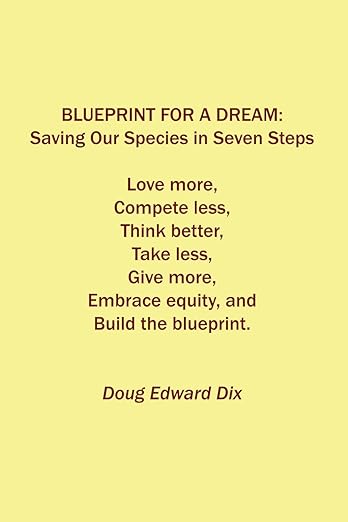
Title: Blueprint for a Dream: Saving Our Species in Seven Steps
Subject: Non Fiction
Release Date: March 19, 2025
Reviewer: Chelsea Burdick
In Blueprint for a Dream: Saving Our Species in Seven Steps, Dr. Doug Dix presents an ambitious manifesto that asks readers to confront an urgent thesis: humanity is a on the path to a self-inflicted collapse unless radical changes are made to reorient values, institutions, and daily habits. Dix blends personal memoir, ethical teachings, critiiques of modern institutions and policies, and practical program design into a single blueprint that is summed up in seven imperatives: love more, compete less, think better, take less, give more, embrace equity, and build the blueprint. The book’s tone is urgent and plainspoke; it serves a call to collective moral and material acton, grounded in science and animated by Judeo-Christian and humanist ethics. Dix’s ethical framework—equal worth of all persons, the Golden Rule, austerity as philanthropy, and the primacy of species survival—gives the book coherence. The repeated refrain that “no one is entitled to extra until everyone has enough” becomes a powerful organizing proposition that ties nutrition, taxation, education and climate policy together into an integrated ethic fueled by the familial foundation.
Dr. Dix begins his profound call to action with an extensive look at his own background. From years of research and working as a tenured professor to working extensively with nonprofits, Dix’s accolades make him a trusted source in the information that he presents and allows readers to take his theoretical blue print seriously. His professional background gives him a unique perspective on how modern infrastructures and policies, including the education system and more, don’t actually work to alleviate problems the poor face, environmental problems and more.
Blueprint for a Dream: Saving Our Species in Seven Steps is well written and easy to follow. This thesis tackles some tough and complex topics. There are rarely simple causes or solutions to the problems that afflict society, the environment and more. While these issues and the solutions are complex, Dix does a phenomenal job at explaining them thoroughly and simply in a way that is easy for the average ready to follow and understand. The manuscript is well-proofread and free of errors.
Readers who are educators, philanthropic leaders, and community readers will likely take interest in the premise of Blueprint for a Dream: Saving Our Species in Seven Steps, especially with those who have a intrinsic desire to improve the world. Those are are alarmed by climate change, inequality, and profit corruption will also find this book interesting and inspiring. This book does have the potential to be a difficult read for those that are reluctant nonfiction readers.
Excellent writing, extensive research and evidence, and the author’s personal experiences combine to create a book that is hopeful in the future while also offering a realistic view of the state of the world. This complex book earns a five out five rating. Even readers who might not share the same religious views or ideas about the states of the world, will be able to appreciate Dix’s well-articulated analysis and solution proposal presented in Blueprint for a Dream: Saving Our Species in Seven Steps.